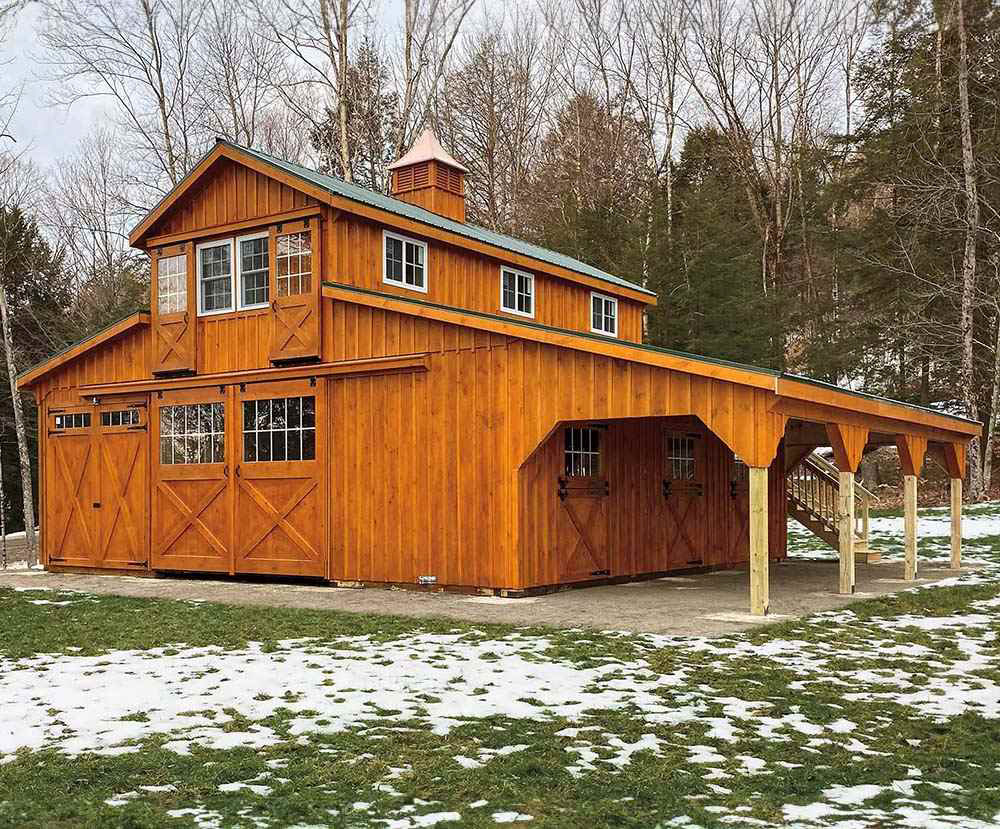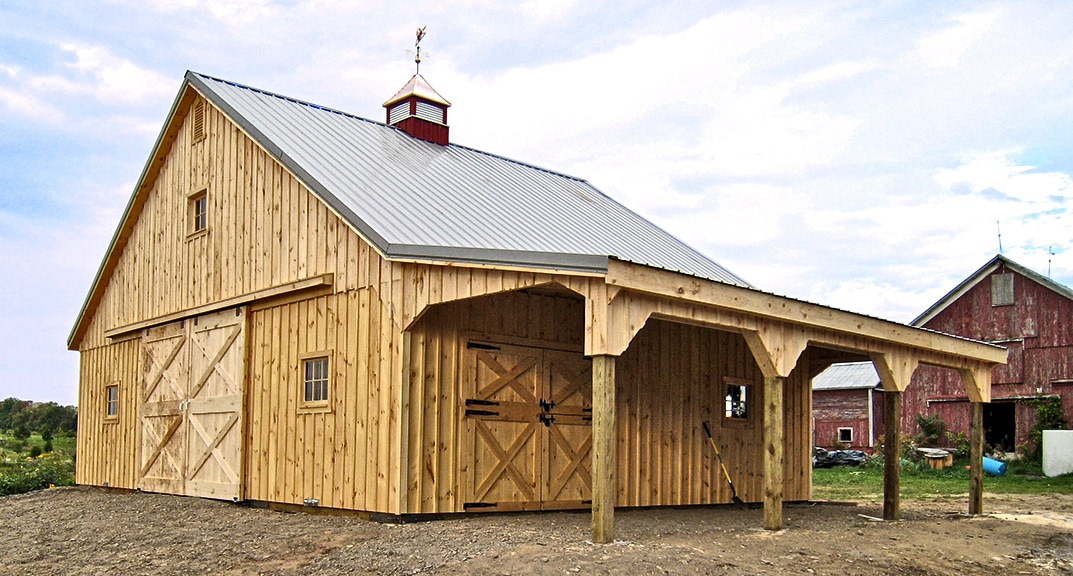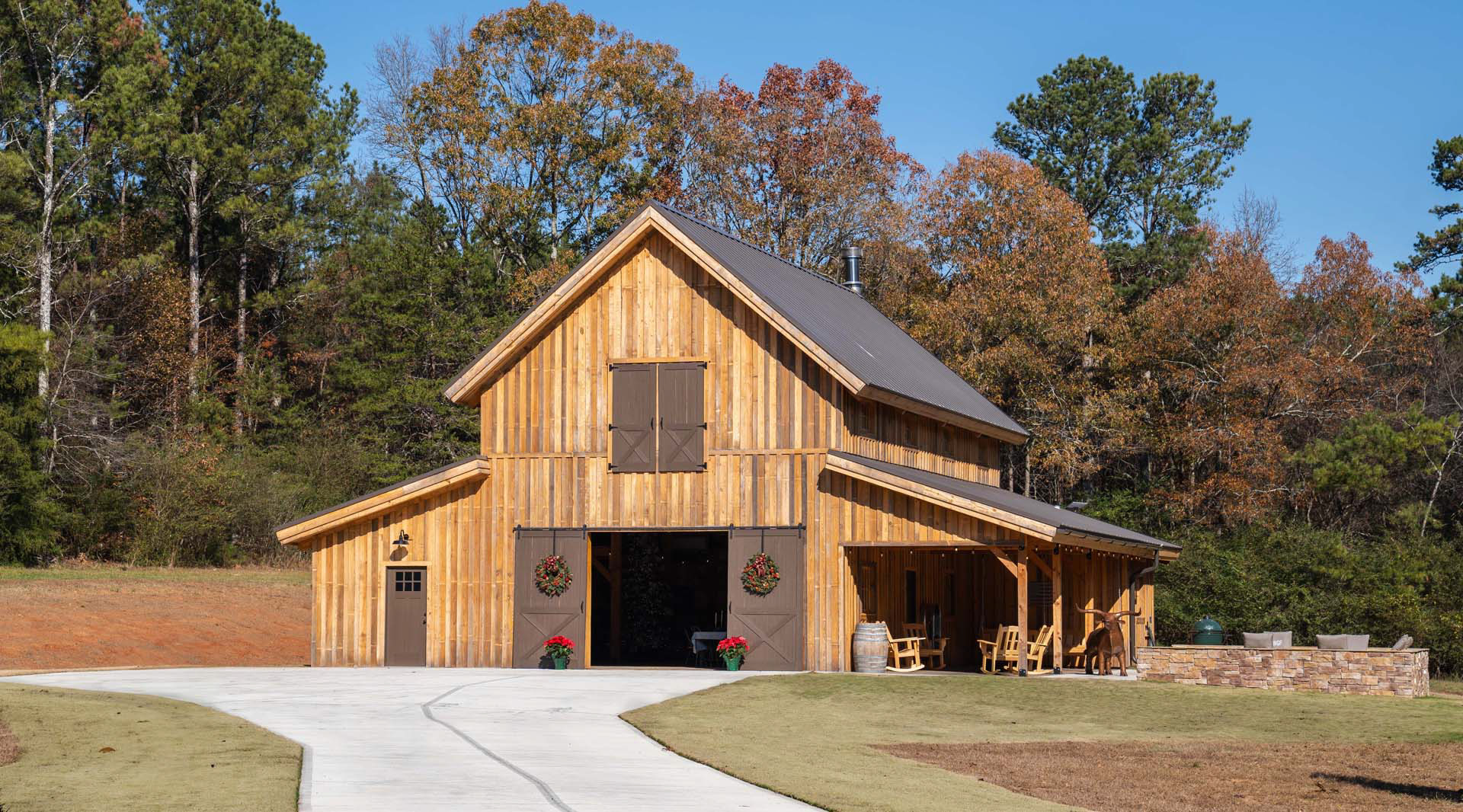
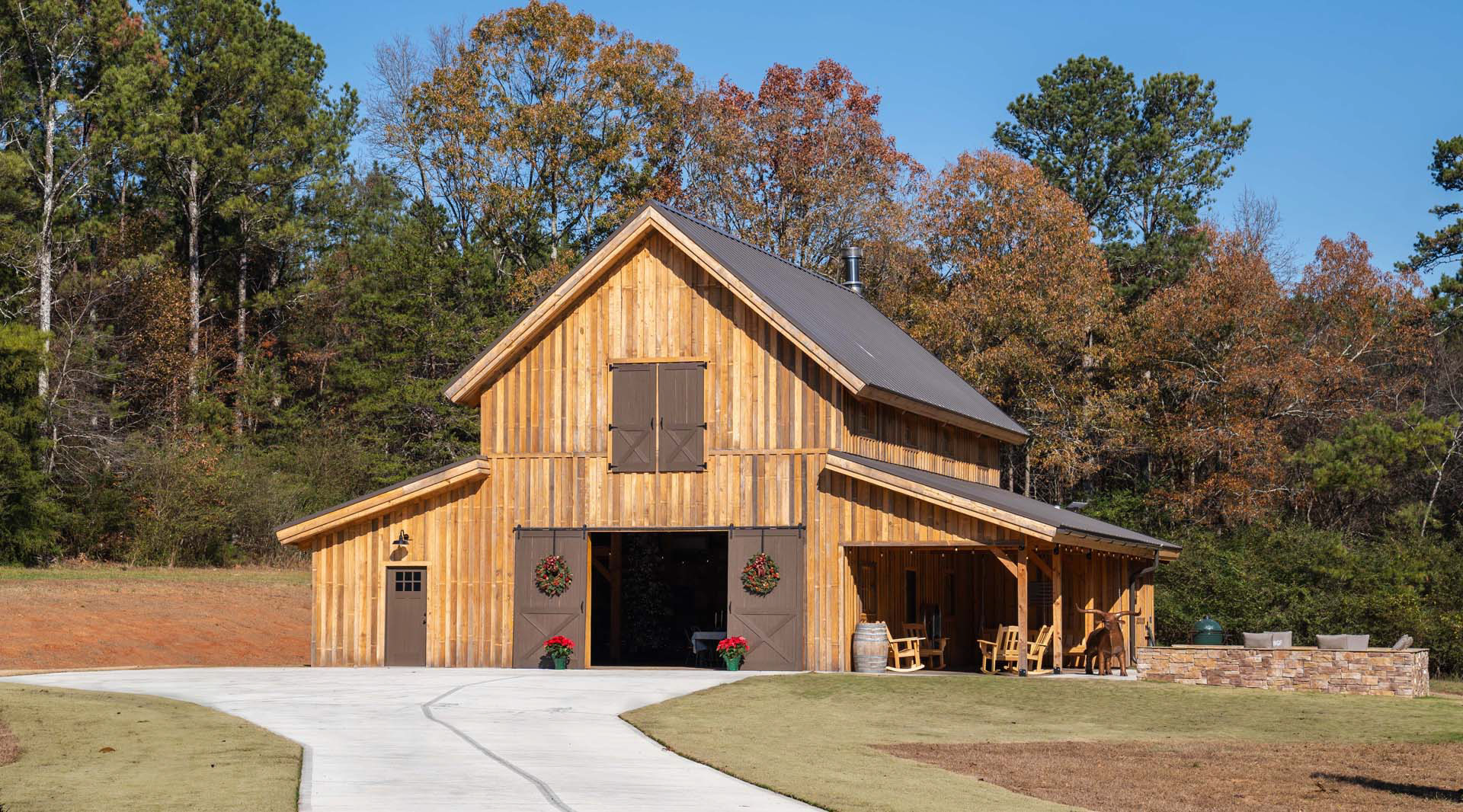
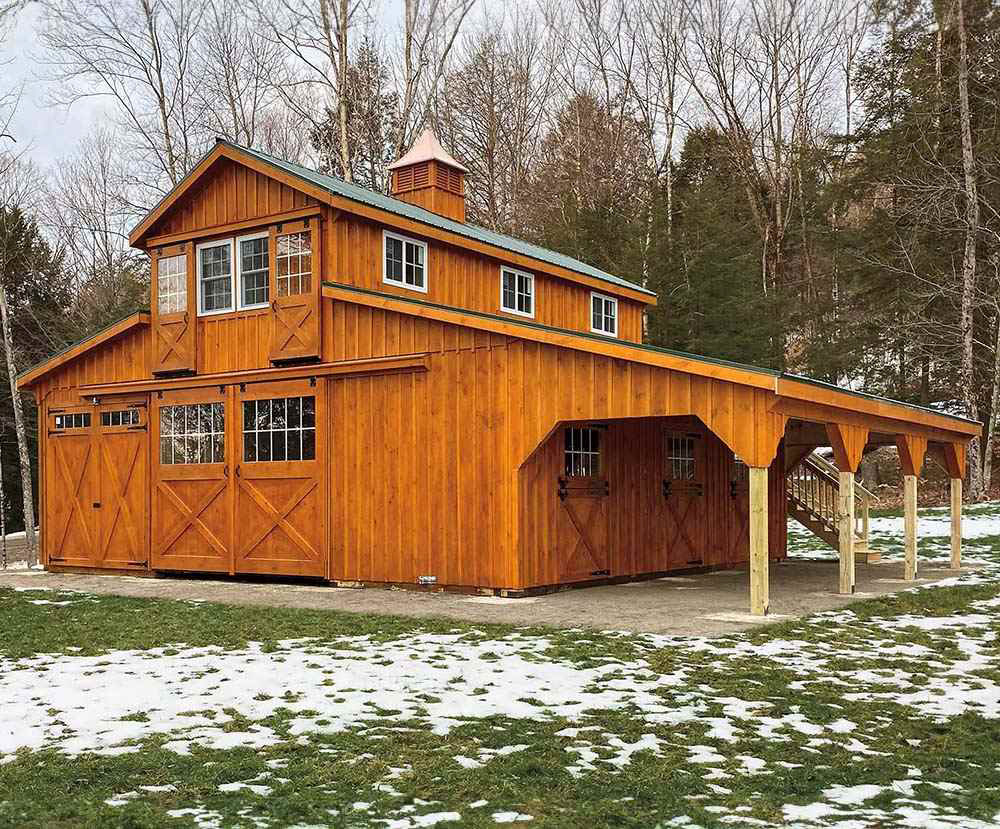
Thom designs timber frame barns and accessory buildings using traditional mortise and tenon construction, a proven building method known for strength, longevity, and authentic craftsmanship. These structures—whether new or part of a historic barn restoration—are carefully proportioned to complement the main residence and surrounding landscape. Our barn designs are frequently inspired by traditional agricultural architecture, making them well suited for properties seeking historic preservation, adaptive reuse, or accessory structures that feel consistent with traditional home design.
Barns and accessory buildings are often subject to specific zoning bylaws and permit requirements, particularly when located on properties with historic significance or within designated historic districts. Depending on location and use, projects may require special permits, zoning review, or historic commission approval, especially for adaptive reuse or conversion to accessory dwelling units or studios. We guide clients through the architectural planning process with careful attention to local zoning regulations and preservation guidelines, helping ensure that barn projects are both compliant and sensitive to historic character.
His work integrates traditional residential architecture with durable materials and time-tested construction techniques, resulting in barns and accessory buildings that feel intentional, functional, and enduring. Whether designing a new mortise-and-tenon barn or preserving an existing historic structure, we focus on architectural integrity, regulatory awareness, and long-term value. The result is custom architectural design that supports historic preservation while meeting modern needs for flexibility, storage, workspace, or living space.